Wednesday, 11 February 2015

Leveled Reading: The Making of a Literacy Myth

M'reen
I chose this photo of my walk in Malham as the ancient structure of a style has steps
of an appropriate height for the situation, with hand supports for the walker
and a swing 'door' for dogs of various sizes and abilities.
It is simple to use, effective in execution of its purpose, cheap to construct / maintain,
tested in its effectiveness
and importantly it is an attractive and satisfying way of furthering one's progress.
I think that it demonstrates the conclusion of the following article that an appropriate combination
of styles is preferable for a rounded approach that provides the desired benefits.
Considering regarding reading beyond one's current capabilities,
be that as a student of reading or reading in a new subject area
then Turbo Charged Reading comes into its own because the unknown is taken
directly into the innermind where it becomes part of one's inner confidence
so that when brought into the working conscious awareness during reading (out loud),
study or conversation it has a basis of knowledge that is enhanced with reading.

Leveled Reading: The Making of a Literacy Myth

By Robert Pondiscio and Kevin Mahnken 

Among opponents of the Common Core, one of the more popular targets of vitriol
is the standards’ focus on improving literacy by introducing higher levels of textual complexity
into the instructional mix. The move to challenge students with more knotty, grade-level reading material represents a shift away from decades of general adherence to so-called
“instructional level theory,” which encourages children to read texts pitched at or slightly above
the student’s individual reading level. New York public school principal Carol Burris,
an outspoken standards critic and defender of leveled reading, recently published 
an anti-Common Core missive on the Washington Post’s Answer Sheet blog that was fairly typical of the form. Where, she wondered, “is the research to support: close reading, increased Lexile levels, the use of informational texts, and other questionable practices in the primary grades?”
The blog post, which has already been intelligently critiqued by Ann Whalen at Education Post, expanded on remarks delivered by Burris earlier this month at an Intelligence Squared U.S. debate with Fordham president Michael Petrilli and former assistant secretary of education
Carmel Martin. There, too, she demanded evidence of literacy improvements
arising from the use of complex texts.

A fair request and one that warrants a thorough response.
But first, for the benefit of readers who are neither teachers nor literacy specialists,
a quick explainer on how these two theories of reading work:
In leveled reading, a teacher listens as her student reads a piece of text at a given reading level.
If the child makes two-to-five mistakes per one hundred words,
that is considered her “instructional” level. Zero or one mistakes means the book is too easy; 
six or more mistakes and that level is deemed her “frustration” level.
Children are then offered lots of books at their “just right” level on the theory that if they read extensively and independently, language growth and reading proficiency will follow,
setting the child on a slow and steady climb through higher reading levels. It sounds logical,
and, as we will see, there are definite benefits to getting kids to read a lot independently.
By marked contrast, Common Core asks teachers to think carefully about what children read
and choose grade-level texts that use sophisticated language or make 
significant knowledge demands of the reader (teachers should also be prepared, of course, 
to offer students support as they grapple with challenging books).
Instead of asking, “Can the child read this?” the question might be, “Is this worth reading?”
Leveled reading is intuitive and smartly packaged (who wants kids to read “frustration level” books?), 
but its evidence base is remarkably thin.
There is much stronger research support for teaching reading with complex texts.
What’s the source of the blind faith that Burris and others have in leveled reading instruction?
“In the decades before Common Core, an enormous amount of the instruction 
in American elementary and middle schools has been with leveled text,” says David Liben,
a veteran teacher and Senior Content Specialist at Student Achievement Partners.
“The generally poor performance of our children on international comparisons speaks 
volumes about its effectiveness. 
To become proficient, students need to have the opportunity to read, with necessary support, 
rich complex text. But they also need to read—especially if they are behind—a huge volume 
and range of text types just as called for in the standards.”
Students could read many of these less complex texts independently. “Instruction with complex text 
at all times is not what is called for, even by Common Core advocates,” Liben takes care to note.
Burris and others, however, offer a reflexive defense of leveled instruction.
At the Intelligence Squared event, she claimed that “We know from years of developmental reading research that kids do best when they read independently with leveled readers.”
Such surety is belied by a surprising lack of rigorous evidence.
Literacy blogger Timothy Shanahan, a Distinguished Professor Emeritus of urban education
at the University of Illinois at Chicago, recently detailed his discovery of the inauspicious origins
of instructional level theory as a young scholar.
Made famous in Emmett Betts’s influential, now-little-remembered 1946 textbook 
Foundations of Reading Instruction, leveled reading theory actually emerged from
a more obscure study conducted by one of Betts’s doctoral students.
“I tracked down that dissertation and to my dismay it was evident that they had just made up
those designations without any empirical evidence,” Shanahan wrote. When the study—
which had in effect never been conducted—was “replicated,” it yielded wildly different results.
In other words, there was no study, and later research failed to show the benefits of leveling.
 “Basically we have put way too much confidence in an unproven theory,” Shanahan concluded.
Experts have spent much of the last four decades unraveling elements of Betts’s thesis,
as Douglas Fisher and Nancy Frey recently demonstrated in The Reading Teacher
a popular journal
The authors, who work closely with the International Reading Association (IRA), were longtime advocates of leveled reading. Re-examining the published research in light of the new standards, however, they found that the use of leveled text beyond the very first years of primary school 
yielded no achievement gains in students.
The belief that young readers should only be taught from texts that they understood 
to a level of 95 percent or higher—a stringent notion of comprehension first envisioned by Betts
—has been found to be erroneous. Researchers William R. Powell and C.G. Dunkeld, 
as early as 1971, said that the 95 percent–cutoff was too high; and, more recently, 
academic Juliet Halladay condemned it as “somewhat arbitrary.”
Even more striking to Fisher and Frey was the abundance of support for the use 
of more difficult reading material: “Surprisingly, we did find studies suggesting that students 
learn more when taught with texts that were above their instructional level.”
One such prominent study, though unheralded in their review, was that of the Science IDEAS model put forward by researchers Michael Vitale and Nancy Romance.
The program, which replaces eight weeks of English Language Arts lessons with a regimen
of complex science instruction for a group of third- to fifth-graders,
was shown to not only enhance scientific aptitude among the group,
but also accelerate reading comprehension through the use of complex science texts.
Another trial, organized by specialists at Brigham Young University, divided a swath of struggling students into three groups of “paired readers,” each furnished with texts of a set difficulty level. Paired reading, a method by which two pupils read aloud together, has proven broadly successful
in generating literacy gains among children; indeed, all three groups improved through the use
of the paired system. But the greatest advance was made by the group using text that was two years above its instructional level. Burris has dismissed paired reading and the study as “idiosyncratic”;
her meaning here is obscure, but she might have more simply described it as a proven,
effective, and inexpensive way of helping children learn to read.
In addition to these studies, Shanahan, in the IRA journal Reading Today Online,
lists twenty studies showing the efficacy of instruction with more complex text.
Thus we have a significant and growing body of research providing support for this initiative.
To be emphatically clear, none of this is data should be taken to advocate for a total phasing-out
of texts students can read independently, many of which would be at lower levels of complexity. “Nowhere in the Common Core standards,” Liben concurs,
“or in the work of these experts is it recommended that we abandon this practice.
This is why the Core standards call for all students to read ‘widely and deeply.’ Not doing so
would make it impossible to grow the vocabulary and knowledge essential to success.”
Russ Walsh, a teacher and curriculum director, making the case for leveled instruction
in another Answer Sheetpost, finally concedes that the best approach
“is to balance our instruction between independent level, on-level, and frustration level texts.”
On this we agree. But before Common Core, such balance was far less likely, too often denying
our most needy students the opportunity to read, enjoy, and benefit from a full range of rich texts. 
As Alfred Tatum noted in the Fisher article cited above, “Leveled texts lead to leveled lives.”

This first appeared on the Fordham Institute’s Common Core Watch blog.


http://educationnext.org/leveled-reading-making-literacy-myth/

Introduction to Turbo Charged Reading YouTube
A practical overview of Turbo Charged Reading YouTube
How to choose a book. A Turbo Charged Reading YouTube
Emotions when Turbo Charged Reading YouTube
Advanced Reading Skills Perhaps you’d like to join my FaceBook group ?
Perhaps you’d like to check out my sister blogs:
www.innermindworking.blogspot.com         gives many ways for you to work with the stresses of life
www.ourinnerminds.blogspot.com               which takes advantage of the experience and expertise of others.
www.happyartaccidents.blogspot.com         just for fun.

To quote the Dr Seuss himself, “The more that you read, the more things you will know.
The more that you learn; the more places you'll go.”

Wednesday, 4 February 2015

Turbo Charged Reading and Emotions


When you have to read a book you really dislike or are not interested in; giving your mind the instruction to learn enough for a particular exam might not be desirable to you or to be believable to your innermind. If this is the case your innermind is going to follow your belief and make learning very difficult. However there are ways around this by finding something that is acceptable to your innermind. The major hindrances to Turbo Charged Reading are: Procrastination, Confidence, Habit & Over Expectation and of Creating believable Mind Instructions. All of these are covered in the TCR programme and all these skills can be used to enhance your everyday life. Not only might you e.g. TCR a great many self development books in a short amount of time and gain that advantage but during the course you will learn simple and effective energy skills that you can use in the moment anywhere you happen to be throughout your day.

Introduction to Turbo Charged Reading YouTube
A practical overview of Turbo Charged Reading YouTube
How to choose a book. A Turbo Charged Reading YouTube
Emotions when Turbo Charged Reading YouTube
Advanced Reading Skills Perhaps you’d like to join my FaceBook group ?
Perhaps you’d like to check out my sister blogs:
www.innermindworking.blogspot.com         gives many ways for you to work with the stresses of life
www.ourinnerminds.blogspot.com               which takes advantage of the experience and expertise of others.
www.happyartaccidents.blogspot.com         just for fun.

To quote the Dr Seuss himself, “The more that you read, the more things you will know.
The more that you learn; the more places you'll go.”


Wednesday, 28 January 2015

GCHQ employs more than 100 dyslexic and dyspraxic spies

GCHQ headquarters in Cheltenham. Photo: ALAMY

GCHQ employs more than 100 dyslexic and dyspraxic spies
The British intelligence agency uses dyslexics' ability to analyse complex information
in a 'dispassionate, logical and analytical' in the fight against terror


By Alice Philipson
GCHQ employs more than 100 dyslexic and dyspraxic 'neuro-diverse' spies
to harness their analytical skills in the fight against terror.
The British intelligence agency uses their ability to analyse complex information
in a "dispassionate, logical and analytical" way to combat threats such as foreign espionage.
While many people with dyslexia struggle with reading or writing,
they are often extremely skilled at deciphering facts from patterns or events.
  
IT specialist Matt, 35, chairman of the dyslexic and dyspraxic support community at GCHQ,
told The Sunday Times: "What people don't realise is that people with neuro diversity
usually have a 'spikyskills' profile, which means that certain skill areas
will be below par and others may be well above," he said.
"My reading might be slower than some individuals and maybe my spelling is appalling,
and my handwriting definitely is ... but if you look at the positive side,
my 3D spacial-perception awareness and creativity is in the top 1% of my peer group."
(Being slightly dyslexic I simply had to highlight that line, we've probably experienced being run down for years.)

Some 120 "neuro-diverse" staff employed by the intelligence agency.
Children are diagnosed with dyslexia for a range of reasons including those whose difficulty
in reading is unexpected, those who show a discrepancy between reading and listening comprehension or pupils who do not make meaningful progress in reading
even when provided with high-quality support.
The NHS estimates that 4-8 per cent of all schoolchildren in England have some sort of dyslexia.
Dyspraxia, which affects sufferers' co-ordination, is diagnosed in around one in 20 children.
A GCHQ official said: "Neuro-diverse individuals can bring additional value to the full spectrum
of roles and jobs across the department."

http://www.telegraph.co.uk/education/educationnews/11111584/GCHQ-employs-more-than-100-dyslexic-and-dyspraxic-spies.html

p.s. When my hair is short people insist on telling me how much I resemble M aka Judy Dench
       so maybe I've missed my calling - I should have been a spy.

Introduction to Turbo Charged Reading YouTube
A practical overview of Turbo Charged Reading YouTube
How to choose a book. A Turbo Charged Reading YouTube
Emotions when Turbo Charged Reading YouTube
Advanced Reading Skills Perhaps you’d like to join my FaceBook group ?
Perhaps you’d like to check out my sister blogs:
www.innermindworking.blogspot.com         gives many ways for you to work with the stresses of life
www.ourinnerminds.blogspot.com               which takes advantage of the experience and expertise of others.
www.happyartaccidents.blogspot.com         just for fun.

To quote the Dr Seuss himself, “The more that you read, the more things you will know.
The more that you learn; the more places you'll go.”

Wednesday, 21 January 2015

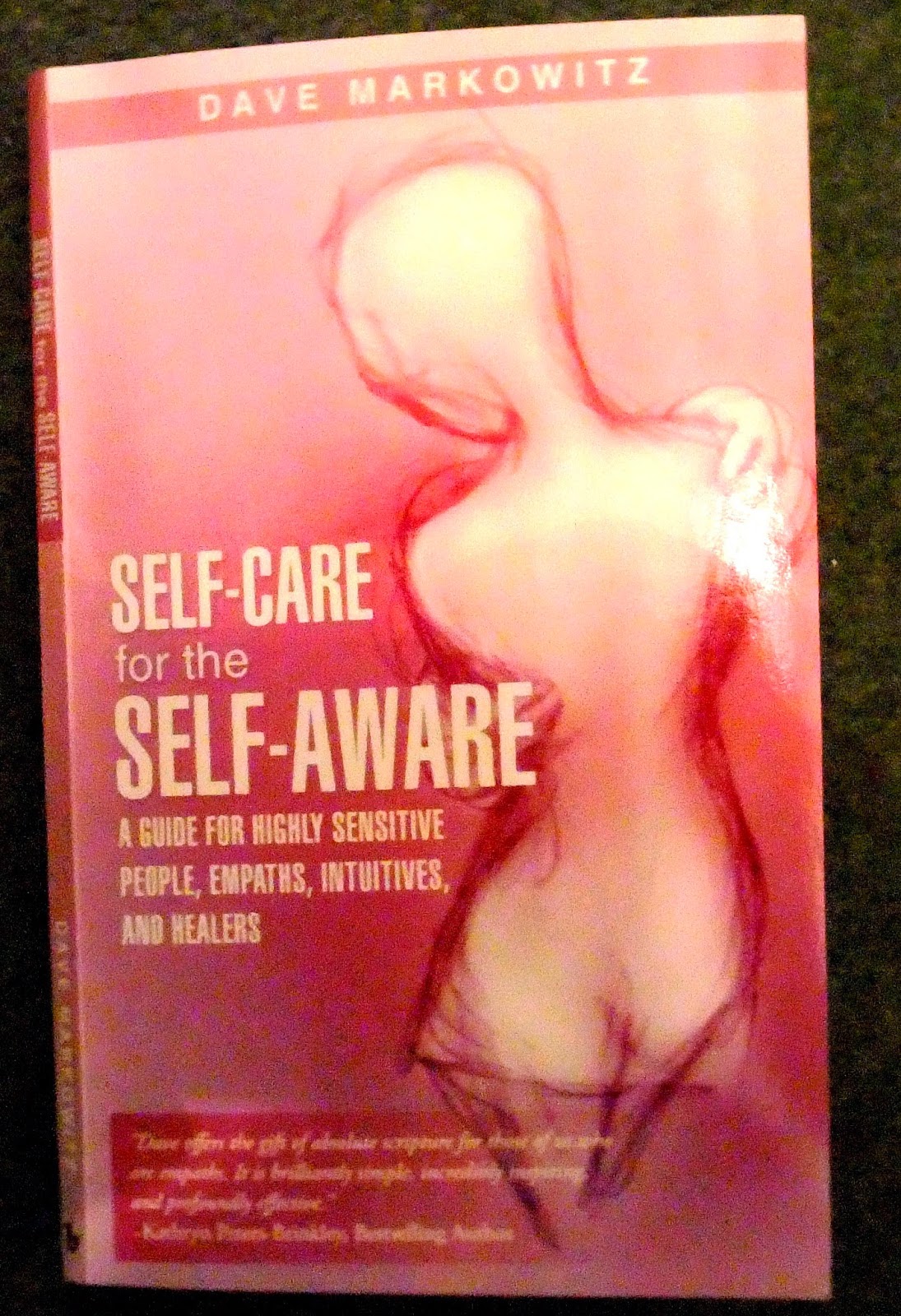
Taking a risk - sharing an important book. Self Care for the Self Aware.

Photo taken by M'reen

Allow me to take a risk, as I think taking a risk is the right thing for me to do.  M'reen      
As a counsellor we sometimes ‘take a risk’ if you consider that it is therapeutically valid.

When Turbo Charged Reading you adopt the four-cornered-gaze and this allows
your eyes to see all the print, diagrams, charts etc on both pages simultaneously.
People who do this often see parallel lines between the two pages but someone with a dominant eye or only one eye physically will not appreciate these lines with the gap between them.
This four-cornered-gaze allows all the print to bypass your eyes
and go directly into your innermind, thus bypassing your conscious mind with its gremlins.
You can think of this as subconsciously absorbing your surroundings.
For me this was evidenced when I went to live in Colorado. U.S.A. and found that the star map
had changed. For you it might be when driving you subconsciously take in amazing amounts of detail concerning your surroundings. Again while living in Colorado Springs and driving one day I ‘saw’
a black round appear at the top left of my windscreen then appear in the middle of what would
have been the passenger’s viewing plane. I instinctively slammed on the break as a deer 
magically appeared directly in-front of me leaving some of its hair in the front paintwork of my car.
I cried for ages and feel tearful now.

As a result of similar experiences I have not been concerned that I very rarely ‘see’ the parallel lines with the blank space between them. When I do see them, even though I know it is ridiculous,
I think, ‘Oh good, I’m doing it properly’. Silly, but I’m just an ordinary person.
I bought a book that was important to me and I made the unreasonable intent
of retaining every word which I changed to understanding the book as if I’d written it myself.
I repeated this far too global statement as I TCR the 90 pages BUT as the book was important to me instead of simply turning the pages as fast as I could I waited until I forced my gaze to ‘see’
the parallel lines. Silly, pointless – but hey – sue me.

Now my risk, for those of you who have a different opinion and experience.
The book was of a spiritual nature and my guides were around me 
and I eventually realised that I was seeing the print as if some of the lines or part of the lines 
were very faintly highlighted yellow.
I TCR a book backwards and upside down at this stage before TCR it right side up and front to back;
owever, this time I repeated that sequence, and yes, the highlighted lines were on almost every page.
Even when I was first practicing TCR and trying so hard to see the parallel lines
I was never aware of seeing the text faintly highlighted. The fact that not all the pages
were highlighted indicated that this was not an optical illusion or fatigue.

Then I moved to the second stage of TCR which is doing nothing  
while your new growing neurons work on the text downloaded, cataloguing it, cross referencing it
with the material already in your innermind (this is the stage of creativity and invention)
and bring forth the material you want at this level of use, memory and long term recall.

Now that I’ve written this during that ‘do-nothing’ time I shall go back to the book and fast read it.
This means that I shall run my finger down the middle of the page 
and ‘see’ the area including the whole lines and the words they/it contains.
I shall then go back into the book and work on it in the way I’ve planned for this particular book.
This fast-reading technique is only usually used for reading novels with other much faster techniques used to access the material from you innermind into your working conscious awareness when reading other material such as text books, manuals, journals, e-mails, newspapers, self help etc.
Even these techniques are often mixed and matched depending upon the person,
the material being accessed and the intended use of that material be it a print or electronic page.

Ah, a spot of lunch – care to join me?

I have had a happy afternoon using my Energetic NLP, Hypnotherapy and Emo Trance skills.

Introduction to Turbo Charged Reading YouTube
A practical overview of Turbo Charged Reading YouTube
How to choose a book. A Turbo Charged Reading YouTube
Emotions when Turbo Charged Reading YouTube
Advanced Reading Skills Perhaps you’d like to join my FaceBook group ?
Perhaps you’d like to check out my sister blogs:
www.innermindworking.blogspot.com         gives many ways for you to work with the stresses of life
www.ourinnerminds.blogspot.com               which takes advantage of the experience and expertise of others.
www.happyartaccidents.blogspot.com         just for fun.

To quote the Dr Seuss himself, “The more that you read, the more things you will know.
The more that you learn; the more places you'll go.”

Wednesday, 14 January 2015

Caffeine: The Silent Killer of Success

Caffeine: The Silent Killer of Success
Dr. Travis Bradberry

This week's tip for improving your performance is the most simple and straightforward method
I’ve provided thus far. For many people, this tip has the potential to have a bigger impact
than any other single action. The catch? You have to cut down on caffeine,
and as any caffeine drinker can attest, this is easier said than done.
For those who aren't aware, the ability to manage your emotions 
and remain calm under pressure has a direct link to your performance. 
TalentSmart has conducted research with more than a million people,
and we’ve found that 90% of top performers are high in emotional intelligence.
These individuals are skilled at managing their emotions (even in times of high stress)
in order to remain calm and in control.

The Good: Isn’t Really Good
Most people start drinking caffeine because it makes them feel more alert and improves their mood. Many studies suggest that caffeine actually improves cognitive task performance 
(memory, attention span, etc.) in the short-term.
Unfortunately, these studies fail to consider the participants’ caffeine habits.
New research from Johns Hopkins Medical School shows that performance increases due to caffeine intake are the result of caffeine drinkers experiencing a short-term reversal of caffeine withdrawal. 
By controlling for caffeine use in study participants, John Hopkins researchers found that 
caffeine-related performance improvement is nonexistent without caffeine withdrawal.
In essence, coming off caffeine reduces your cognitive performance and has a negative impact
on your mood. The only way to get back to normal is to drink caffeine, and when you do drink it,
you feel like it’s taking you to new heights.
In reality, the caffeine is just taking your performance back to normal for a short period.

The Bad: Adrenaline
Drinking caffeine triggers the release of adrenaline. Adrenaline is the source of the “fight or flight” response, a survival mechanism that forces you to stand up and fight 
or run for the hills when faced with a threat.
The fight-or-flight mechanism sidesteps rational thinking in favor of a faster response.
This is great when a bear is chasing you, but not so great when you’re responding to a curt email. When caffeine puts your brain and body into this hyper-aroused state,
your emotions overrun your behavior.
Irritability and anxiety are the most commonly seen emotional effects of caffeine,
but caffeine enables all of your emotions to take charge.
The negative effects of a caffeine-generated adrenaline surge are not just behavioral.
Researchers at Carnegie Mellon University found that large doses of caffeine raise blood pressure, stimulate the heart, and produce rapid shallow breathing, which readers of Emotional Intelligence 2.0 know deprives the brain of the oxygen needed to keep your thinking calm and rational.

The Ugly: Sleep
When you sleep, your brain literally recharges, shuffling through the day’s memories and storing
or discarding them (which causes dreams), so that you wake up alert and clear-headed.
Your self-control, focus, memory, and information processing speed are all reduced
when you don’t get enough—or the right kind—of sleep.
Your brain is very fickle when it comes to sleep.
For you to wake up feeling rested, your brain needs to move through an elaborate series of cycles. You can help this process along and improve the quality of your sleep 
by reducing your caffeine intake.
Here’s why you’ll want to: caffeine has a six-hour half-life, 
which means it takes a full twenty-four hours to work its way out of your system.
Have a cup of joe at eight a.m., and you’ll still have 25% of the caffeine in your body at eight p.m. Anything you drink after noon will still be at 50% strength at bedtime. Any caffeine in your bloodstream—with the negative effects increasing with the dose—makes it harder to fall asleep.
When you do finally fall asleep, the worst is yet to come. Caffeine disrupts the quality of your sleep 
by reducing rapid eye movement (REM) sleep, the deep sleep when your body recuperates
and processes emotions. When caffeine disrupts your sleep, you wake up the next day
with an emotional handicap. You’re naturally going to be inclined to grab a cup of coffee
or an energy drink to try to make yourself feel better. The caffeine produces surges of adrenaline, which further your emotional handicap. Caffeine and lack of sleep leave you feeling tired in the afternoon, so you drink more caffeine, which leaves even more of it in your bloodstream at bedtime. Caffeine very quickly creates a vicious cycle.

Withdrawal
Like any stimulant, caffeine is physiologically and psychologically addictive. If you do choose to lower your caffeine intake, you should do so slowly under the guidance of a qualified medical professional. The researchers at Johns Hopkins found that caffeine withdrawal causes headache, fatigue, sleepiness, and difficulty concentrating. Some people report feeling flu-like symptoms, 
depression, and anxiety after reducing intake by as little as one cup a day. 
Slowly tapering your caffeine dosage each day can greatly reduce these withdrawal symptoms.

Travis Bradberry, Ph.D.
Dr. Travis Bradberry is the award-winning co-author of the #1 bestselling book, Emotional Intelligence 2.0, and the cofounder of TalentSmart, the world's leading provider of emotional intelligence tests, emotional intelligence training, and emotional intelligence certification,


Dr. Travis Bradberry
https://www.linkedin.com/today/post/article/20140908162020-50578967-caffeine-the-silent-killer-of-success

Introduction to Turbo Charged Reading YouTube
A practical overview of Turbo Charged Reading YouTube
How to choose a book. A Turbo Charged Reading YouTube
Emotions when Turbo Charged Reading YouTube
Advanced Reading Skills Perhaps you’d like to join my FaceBook group ?
Perhaps you’d like to check out my sister blogs:
www.innermindworking.blogspot.com         gives many ways for you to work with the stresses of life
www.ourinnerminds.blogspot.com               which takes advantage of the experience and expertise of others.
www.happyartaccidents.blogspot.com         just for fun.

To quote the Dr Seuss himself, “The more that you read, the more things you will know.
The more that you learn; the more places you'll go.”

Friday, 9 January 2015

The One Solution To Getting More Done - 'Microfixing'

I chose this photo that I took on a country road because it amuses me 
but more seriously if you do not take advantage of your time to achieve more with less effort
then you could pay a price you would much rather not! M'reen

The One Solution To Getting More Done - 'Microfixing'

If you feel like there’s a lot more you could be doing or learning but you just don’t have the time,
I have the solution. I call it “microfixing” – and it has changed the way I learn, work and live.
It is a highly addictive learning discipline that merges into most professional lifestyles with ease.
Many of us have a desire to learn more professionally, but most of us are crunched for time. Sometimes it’s just not possible or practical to enter into a Master’s program, but the time
is always NOW when it comes to new ideas, enhancing your skillsets, and getting more done.

Enter microfixing – my personal education discipline.
It’s good old-fashioned self-education with a digital age twist.
Microfixing is about keeping curiosity high, exploring and learning as much as possible,
and casting out “I can’t” type of thinking. I’ve been practicing microfixing in various ways
for the past 10 years and have seen colleagues and friends reap the benefits too.
Microfixing can help you make room for professional advancement, at a micro level,
within your already busy schedule. It requires the full acceptance that you can teach yourself anything – or find a tool to do it quickly and easily for you.
It takes into account your limitations as a busy entrepreneur or professional,
and maximizes what you do have – creativity, curiosity, drive, and infinite access to new tools
and resources for self education.

There are five guiding principles to successful microfixing.
1.    Consume an insane amount of “I-N-P-U-T.”
If you picked up on the “Short Circuit” reference, kudos to you!
But even if you’re not a robot, you need a lot of input to step up professionally and personally.
This means you need to learn – and learn lots – sometimes in a short period of time.
A lot of my favorite microfixing tools are designed to help me get more information in less time,
and as effortless as possible.
Microfixing is purely a volume play. Make consuming information a healthy habit.
Over time, the sheer volume of content you’ve consumed will boost your brainpower,
plain and simple. Because of the volume of digital content you’ve consumed,
your brain has collectively become more aware – which can give you insight,
ideas and drive that others in your industry just can’t match.

2.     Keep your curiosity levels high.
The success of microfixing is predicated on you renewing the main energy source.
This essential energy source is curiosity. Curiosity is a primal instinct.
Curiosity is the best catalyst for exploration, but it’s really numbed in our earlier years
and can have a compounding effect as we get older.
As you begin microfixing, you’ll start to develop a childlike curiosity about the world around you.
In my own experience, and among people I respect and love,
curiosity seems to be an essential element.

3.     Look out for mind trolls. They wreck stuff.
What is a mind troll? It’s a blanket term for the defeatist part of your brain that stops you
from moving forward. It’s the voice that pops up with “I can’t” when you think
of doing something big and bold. They dampen creativity and curiosity.
Some are old and some are new – but almost all of them are unhealthy.
Whether they come from fear, lack of confidence or bad experiences – it’s time to get them out.
You need to make adjustments to your mind and get rid of these mind trolls.
Changing old ways of thinking can cascade positively to other areas of your life. Trust me. Reprogramming the way we frame things is the main area where we need the most help.
Once you start looking for mind trolls, you will be shocked at how many you find.
When a thought, at its base level, is purely defeatist, then you have found a mind troll.
What are your mind trolls? Share them in the comments section to see how we all relate. 

4.     Find ways to make more time.
I’m time-starved just like you, but I’ve found a few ways to make more time for what’s important
by eliminating what’s not. For example, I haven’t had cable for over four years 
and I don’t miss it at all. Netflix NFLX -2.52%, iTunes, and the web keep me happy, 
and I have more time for microfixing.
I turn off the radio and use the drive to focus on microfixing too.
You can also find ways to make more time by using online tools (see my suggestions below).

5.     Use online resources and digital tools to cut down on your learning curve.
You don’t have to invest time and money in a huge professional program in order to learn,
or in order to get something technical done.
There’s no excuse any more – you can literally teach yourself anything. 
The web has opened up massive opportunities, 
especially for those of us who are curious and success-oriented.
Here are some of my favorite ways to learn 
and some tools that I personally use to apply microfixing in my life.
Wayne Dyer – I’ve listened to Wayne for years. Changing the mind is so important.
I like the Power of Intention audiobook.
Another great one for the mind is If You Want to Write by Brenda Ueland.
Get an Audible account. Seriously. I read 10 times more books in a year
than I would regularly with this service. I listen to books in the car or relaxing on the patio.
Read more articles with Text2Speech. I get through 10 times more articles with this tool. Just copy and paste the text from any article you want to read into the app. It will read the article to you.
Try out Umano. This app takes interesting content in several subjects,
and has professional voice actors read the text. It’s awesome!
Rely on Flipboard to help you increase the content you consume. It pulls in your favorite RSS feeds, as well as suggest articles you might like in a slick digital magazine.
Use online university courses (like those available at MIT)
to get targeted instruction on specific topics.
Explore Lynda.com for courses on software development, web design, business, and creativity.
Try Forrester for research and insight into strategies and trends that can help your business.
Microfixing is one part philosophy and one part tool set. It’s up to you to decide
how you fit in professional and creative development.
With the right attitude, and some key tools, you can learn more and stay ahead of the curve.
I hope you find this way of learning just as addictive as I do.

http://www.forbes.com/sites/lawtonursrey/2014/01/21/get-more-done-with-microfixing/?utm_content=buffer516c5&utm_medium=social&utm_source=linkedin.com&utm_campaign=buffer

I love audiobooks. They allow me to go through 10 times more books in a year than I normally could and it saves trees, time and money at the same time. They are the perfect solution for the time-starved who are eager to keep learning. My personal favorite is to listen to my audiobooks
on the way to work. I don’t know about you, but sometimes I get stuck in my own mindset.
Being able to take a look inside someone else’s way of thinking, and learning how their experiences have helped and hurt their entrepreneur path, allows me to see things in a different way.

Introduction to Turbo Charged Reading YouTube
A practical overview of Turbo Charged Reading YouTube
How to choose a book. A Turbo Charged Reading YouTube
Emotions when Turbo Charged Reading YouTube
Advanced Reading Skills Perhaps you’d like to join my FaceBook group ?
Perhaps you’d like to check out my sister blogs:
www.innermindworking.blogspot.com         gives many ways for you to work with the stresses of life
www.ourinnerminds.blogspot.com               which takes advantage of the experience and expertise of others.
www.happyartaccidents.blogspot.com         just for fun.

To quote the Dr Seuss himself, “The more that you read, the more things you will know.
The more that you learn; the more places you'll go.”

Monday, 29 December 2014

Indigos find Quantum connection with the books they are reading.

Hear a book and then tell the story.
Smell a book or feel a book.
Uploaded on 30 Aug 2011
NOW IN HD, subtitles are in the video. This is one of the most amazing video's I have seen in a long time, This shows the power of the human mind system, children being able to read entire books with only flipping through the pages and visualizing the story.. also there is talk of children being able to see off into space and read books that haven't been written yet.. this is astounding. This is the future of humanity this is quantum speed reading.
copyrights:
NOTE: This video was created with permission from Yumiko Tobitani.
NOTE: Music on this promo is used with permission of RHC Productions*, Canada, Network Music, USA, and our license with ASCAP.
* The beginning music is from "Mental Clarity" by Robert Coxon
VIDEO URL: https://www.kryon.com/quantumvideo.html

Introduction to Turbo Charged Reading YouTube
A practical overview of Turbo Charged Reading YouTube
How to choose a book. A Turbo Charged Reading YouTube
Emotions when Turbo Charged Reading YouTube
Advanced Reading Skills Perhaps you’d like to join my FaceBook group ?
Perhaps you’d like to check out my sister blogs:
www.innermindworking.blogspot.com         gives many ways for you to work with the stresses of life
www.ourinnerminds.blogspot.com               which takes advantage of the experience and expertise of others.
www.happyartaccidents.blogspot.com         just for fun.

To quote the Dr Seuss himself, “The more that you read, the more things you will know.
The more that you learn; the more places you'll go.”